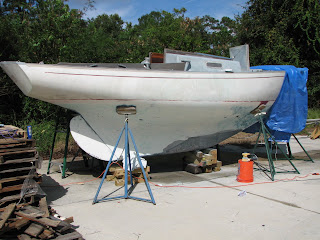
The Froon wrote: Also, for fairing out the keel, do I need to go with a high-density filler…or can I get away with 407?
The phrase "get away with" implies that you think 407 low density filler, aka phenolic microballoons, is somehow a less than suitable choice. This is not the case.
Microballoons are a
fairing filler. They are for fairing, both above and below the waterline. They combine the strength needed in a typical fairing situation with relatively light weight and the workability/sandability characteristics needed by the user.
The term "low density" seems to lead many people to believe that somehow they are less suitable than the "high density" filler that is also available, but that's just not true. "Low density" doesn't mean cheap or weak. It's low density because the material in the filler--hollow spheres of phenolic (plastic) material, or "balloons"--is lightweight and hollow; hence low density. It's probably a poor choice of nomenclature by the West System guys.
West System high density filler is not a fairing filler: it's an adhesive filler designed for other purposes, namely hardware bonding.
The Froon wrote:...any feedback?
The "blisters" you show in your photos are the typical gelcoat divots that occur at and just above the waterline, usually when the boottop is located too close to the water and therefore remains fully or partially submerged. Water gets behind the non-submersible paint used here and festers, eventually causing these cosmetic blemishes in the gelcoat. They are extremely common in these old boats. The growth that tends to form in these areas, when the boot is too low, only exacerbates the moisture retention problem. Also, significant growths can actually adhere to and, when removed, pull away sections of gelcoat like this. Proper boottops and clean waterlines aren't only a cosmetic thing.
How far you take the repair preparations will depend largely upon how far you're taking the paint preparation. You can sand and fill these areas as you suggest, and it will be fine. Depending on the character of the blemishes, certain aspects of the filler may remain visible beneath the highest gloss paints. Therefore, it may be beneficial to grind down the surface further in the worst areas, so that your filler covers a larger area with better bonding surface.
I can't make this judgement based on what I can see and what I can know about your situation, but the real point is that you don't have any sort of significant problem going on here, so treat it as the cosmetic issue that it is.
The Froon
OK, I have to ask what your user name means. You don't have to share, but I bet I'm not the only curious one.